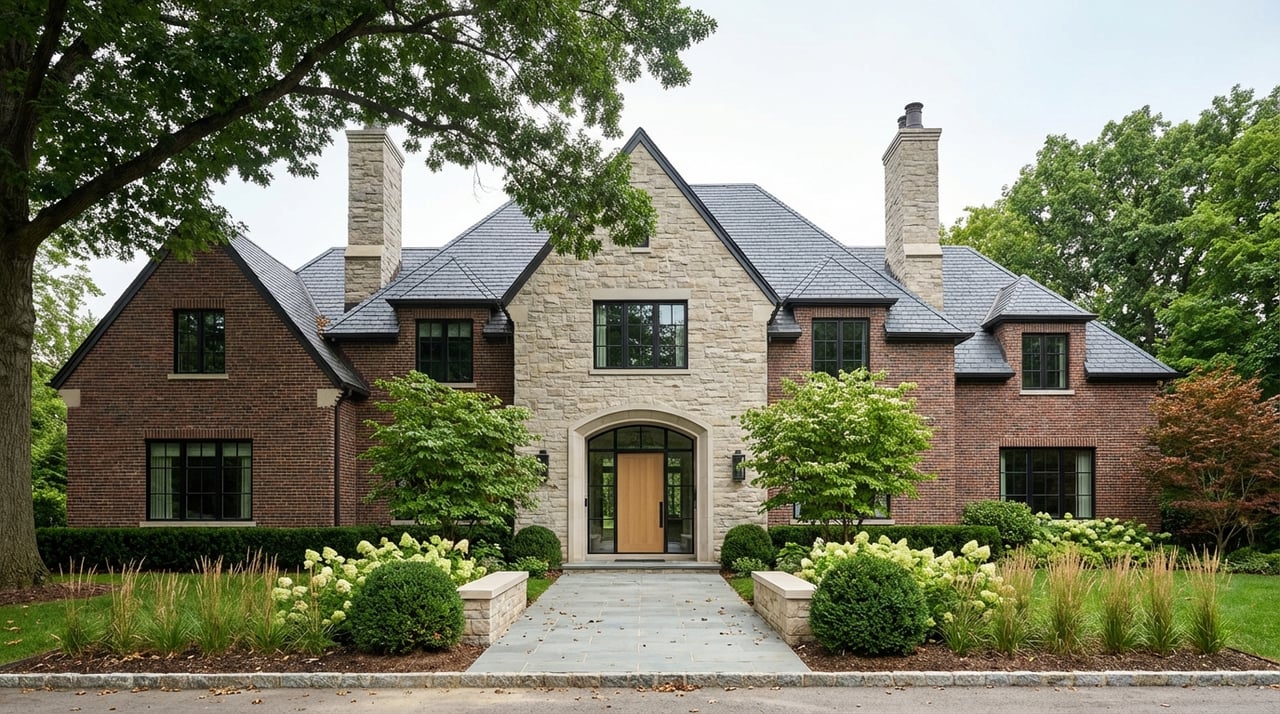
What gives Alpine’s estates their unmistakable presence? It starts with the land itself. Perched on the Hudson River Palisades with steep, wooded slopes and select skyline views, Alpine sets a high bar for design and craftsmanship. If you are exploring a purchase, planning a build, or preparing to sell, understanding how architecture, site planning, and local policy work together will help you make smarter decisions. In this guide, you’ll learn the design languages that define Alpine, how zoning shapes each property, which amenities move the market, and what to watch for during due diligence. Let’s dive in.
Why Alpine looks this way: setting and zoning
Alpine sits on a rocky ridgeline above the Hudson, where diabase cliffs, talus, and mature woodland create dramatic terrain and, on select sites, river or Manhattan sightlines. The Palisades environment influences everything from driveways and terraces to window placement and view corridors. Steeper slopes, shallow soils in places, and forested summits reward careful siting and engineered solutions for stability and drainage. You see this in the prevalence of stepped floor plans, retaining walls, and walkout lower levels on sloped lots. The natural context is well documented by the Palisades Interstate Park Commission’s overview of the area’s geology and forests (learn more about the Palisades landscape).
Local policy reinforces that terrain-first approach. Alpine’s zoning code sets large minimum lot sizes in the upper districts, including R‑A at 2.0 acres and R‑AA at 1.5 acres. Building coverage limits around 9 to 10 percent and improved lot coverage caps near 20 to 25 percent keep massing low and spread out, often with long approach drives and distributed outdoor programs. The borough also defines steep slopes at 15 percent grade and prioritizes tree preservation, with reviews that can require restitution for removed specimens. For buyers and designers, this means footprint, hardscape, and earthwork must be planned with precision and supported by engineered analyses. You can see these policies outlined in the municipal code (zoning and steep‑slope standards).
These physical and regulatory realities shape Alpine’s signature estate language: generous setbacks, privacy-first landscapes, and architecture that either celebrates classic European craft or embraces minimalist glass and stone.
Two design lineages at the top
Traditional and historicist estates
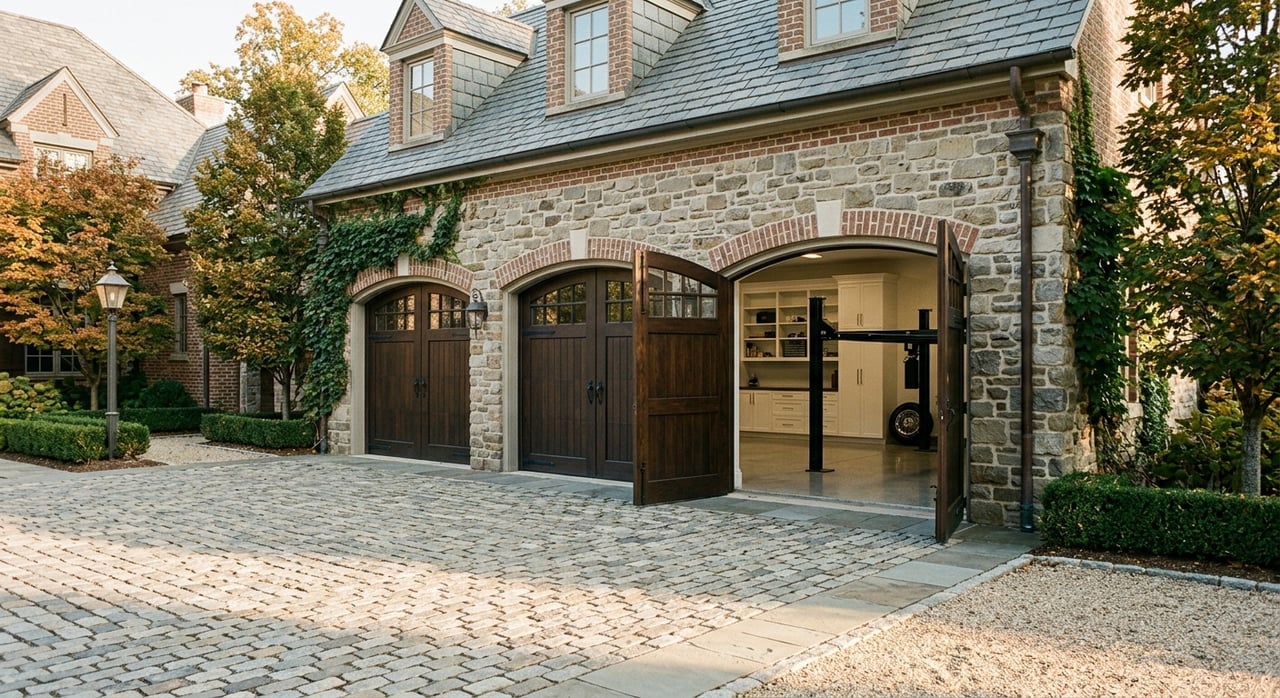
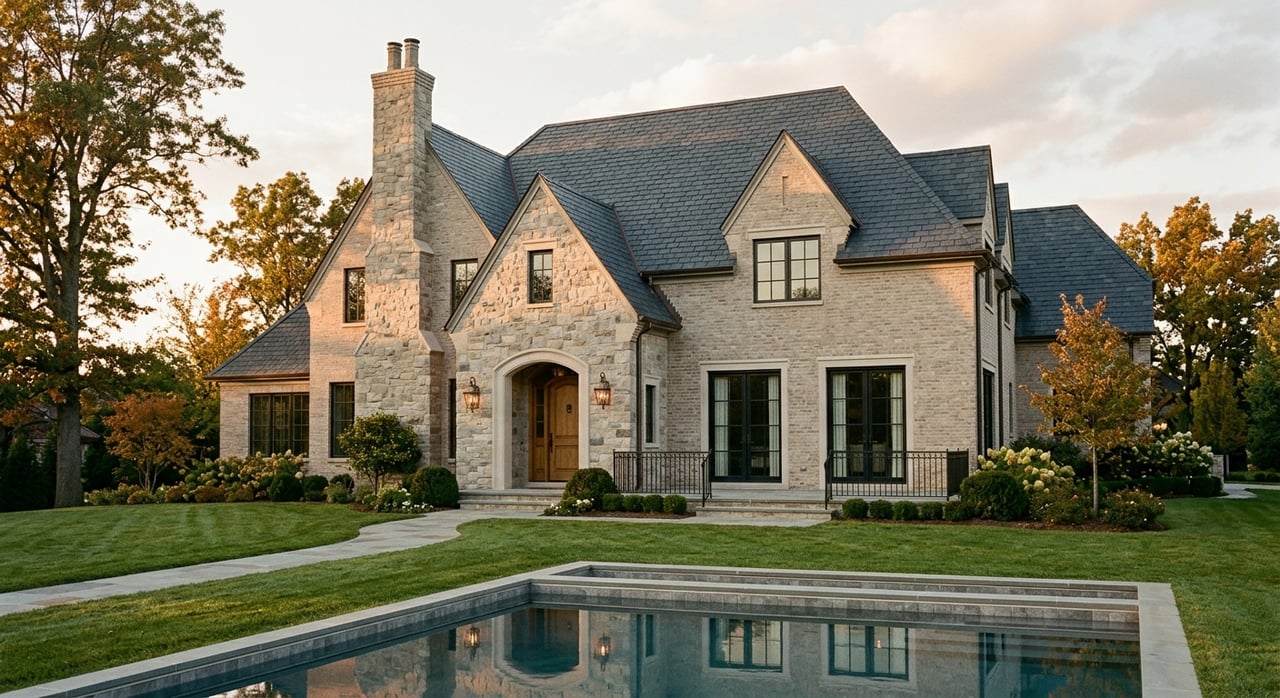
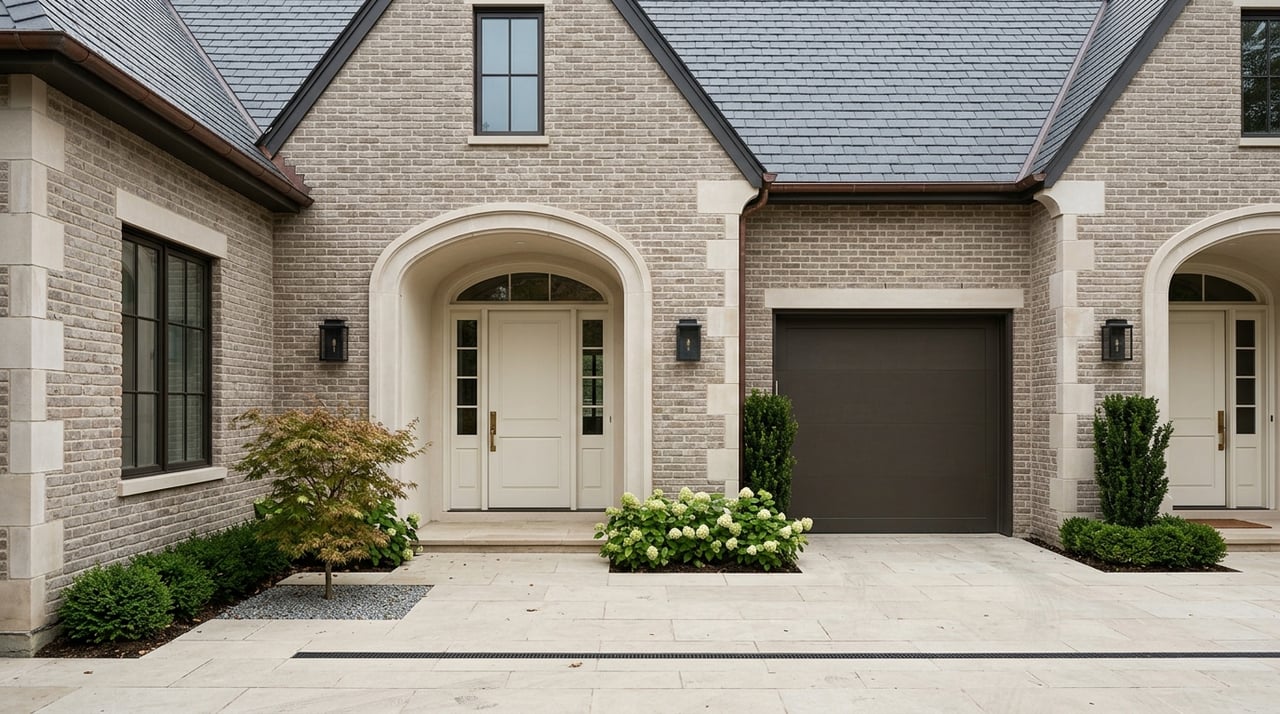
Traditional Alpine estates lean into European or Revival vocabularies. You’ll recognize symmetrical or picturesque massing, natural stone or limestone façades, slate or synthetic-slate roofs, copper detailing, and finely carved millwork. Inside, double-height foyers, wood-paneled libraries, formal dining and reception suites, and hand-finished plaster signal craft and permanence. A standout example is the French chateau–inspired “Chateau de la Roche” at 48 Rio Vista Drive, a 25,700 square foot estate with a high level of finish and formal program (see the listing details). Another reference point is 1 Frick Drive, a more than 30,000 square foot manor-style home with a ballroom, extensive amenities, and multi-level service infrastructure that closed in 2022 for a reported ~$27.5 million (view the property record).
These homes communicate heritage through materiality and scale. Imported limestone, Connecticut-cut granite, and slate create a tactile richness that photographs and shows beautifully. For sellers, that craftsmanship offers a broad appeal across Alpine’s buyer pool.
Contemporary glass and stone
Contemporary Alpine estates present a different kind of luxury. Expect floor-to-ceiling glazing, large operable glass walls, planar stone volumes, and a restrained palette that lowers perceived mass while maximizing light and views. Open plans emphasize indoor-outdoor continuity, especially on flatter parcels or where owners prioritize a modern look. Listings frequently call out soaring ceilings and resort-style terraces with pools. A representative local example is 36 Buckingham Drive, marketed with extensive modern glazing and contemporary finishes (review the listing).
On steeper sites, these homes rely on engineered structure and careful anchoring to create transparent spaces safely and efficiently. The result is a sculptural, view-forward retreat that resonates with design-focused buyers.
Interior programs that define Alpine luxury
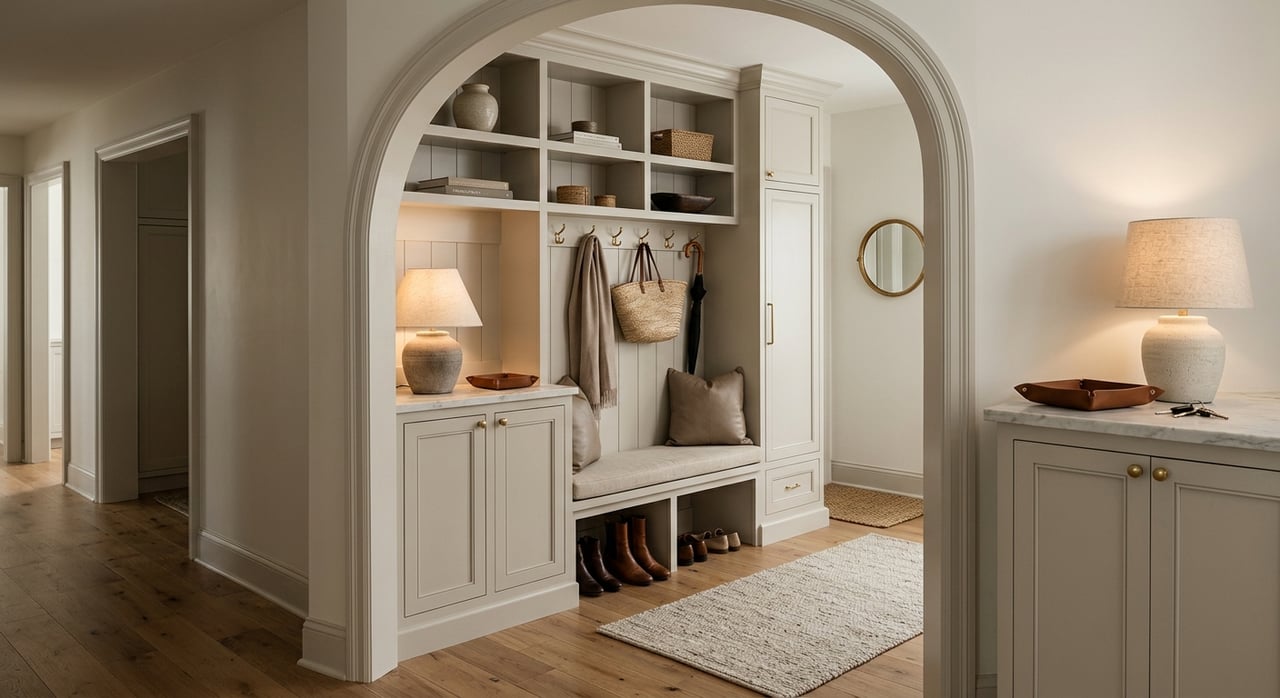
Across both styles, the interior program tends to be deep and hospitality-grade. You will often find multi-level elevators, grand foyers, home theaters, climate-controlled wine rooms, indoor spas or pools, commercial-quality kitchens, service wings with staff suites, and multi-bay or subterranean garages. Entertainment amenities such as ballrooms or bowling alleys are not unusual at the top tier. These components are consistently highlighted in local trophy listings, including the Rio Vista examples cited above (see program highlights).
Landscape architecture and outdoor living
Alpine’s estates extend their architecture into the landscape. Long, gated drives lead to generous motor courts. Layered evergreen screening and specimen trees preserve privacy and frame views. You’ll see formal terraces in bluestone or cut stone, multi-level retaining walls that echo house masonry, and pool complexes with cabanas, outdoor kitchens, or tennis courts. On sloped ground, terracing and subsurface drainage manage runoff within the borough’s improved-coverage limits, a frequent focus during site plan review (review local coverage and slope controls).
Designers often blend native woodland character at lot edges with formal plantings near terraces. The Palisades context skews toward oak and maple in the natural canopy, while Alpine’s climate sits roughly in USDA Zone 7a to 7b, allowing a wide range of ornamentals and evergreen screens to thrive (check the local plant hardiness zone). Municipal tree-preservation priorities make early tree surveys and protection plans essential if you intend to build or expand.
What this means for value
In Alpine, value reflects a combination of site, materials, and program. Four drivers stand out:
- Lot size and siting. Privacy, mature trees, and select view corridors carry a premium.
- Materials and craftsmanship. Stone, slate, copper, and hand-finished details signal quality and market durability.
- Program depth. Guest suites, service wings, and amenity-rich entertainment areas add gravitational pull for buyers.
- Regulatory compliance and engineering. Sensitive-slope design, adept stormwater control, and clean approvals protect long-term value.
These ingredients help explain why Alpine consistently ranks among New Jersey’s most expensive ZIP codes, with multi-million-dollar medians at the top of statewide lists (see PropertyShark’s NJ ZIP code rankings). Trophy transactions reinforce that premium, from the reported ~$27.5 million sale at 1 Frick Drive to architect-designed estates trading in the high teens, such as the reported ~$16.7 million sale at 4 Stone Tower Drive in 2024 (read the sale roundup).
Ownership costs scale with the product. High-value estates often carry six-figure annual property taxes and above-average maintenance budgets for landscape, pools, mechanical systems, and security. MLS records for prominent Alpine properties illustrate these operating realities alongside the amenity sets that define them (reference an example property record).
On resale, both design lineages perform. Traditional European or manor-style homes tend to enjoy broad appeal. Contemporary glass-and-stone estates capture strong attention from design-forward buyers, though tastes can be more polarized. Alpine’s recent sales show both types succeeding at the top end (see a traditional exemplar).
Quick visual checklist: spotting Alpine style
Use this fast scan when you tour a property or review listing media:
- Large, set-back residence on roughly 1 to 6 or more acres, often gated or on a cul-de-sac. Coverage rules encourage a low-rise, expansive plan (zoning overview).
- Traditional cue set: stone or limestone façades, slate roof, copper accents, classical trim. Contemporary cue set: floor-to-ceiling glass, planar stone volumes, minimal ornament (traditional example).
- Interior program depth: elevator, theater, wine room, spa or indoor pool, and multi-bay garages (program reference).
- Landscape and sitework: evergreen screening, specimen trees, terraces, retaining walls on slopes, and a well-planned pool and cabana zone (site and slope controls).
Buying, building, or renovating in Alpine: practical steps
Site due diligence comes first
Before you fall in love with a vision, verify what the land allows. Order a slope analysis, tree survey, and preliminary coverage calculations aligned to local code. On steeper or highly wooded parcels, plan on engineered drainage and retaining strategies. These steps reduce risk and speed approvals in a borough that prioritizes slope stability and tree protection (review the code framework).
Assemble the right design and build team
Choose architects and builders experienced with Alpine’s terrain and review process. Regionally active luxury practitioners, including those behind notable custom estates, understand the balance between presentation and performance on complex sites. If you plan a contemporary glass program on a slope, you will likely need advanced structural solutions early in schematic design.
Plan the landscape as a system
Integrate native-edge planting with formal garden rooms near the house. Consider long-term costs for mature tree care, specimen replacements, and slope stabilization. Alpine’s climate in roughly Zone 7a to 7b supports a robust palette of evergreen screening and ornamentals that can thrive with proper siting (confirm the zone context). Coordinate paving, walls, and pool decks with masonry used on the house to unify the composition and simplify maintenance.
Selling your estate: lead with narrative and craft
When you sell, buyers respond to a cohesive story that pairs architecture with landscape, program, and privacy. High-caliber creative production, clear amenity narratives, and credible market positioning help your property stand out in a selective segment. If you are considering timing, pricing, or pre-market improvements, connect for a tailored plan that aligns design, data, and distribution. Schedule a market strategy call with Taryn Byron to position your Alpine property for its next chapter.
FAQs
What is “Alpine style” in real estate?
- It describes large-lot, privacy-first estates that pair premium materials like stone, slate, and copper with deep amenity programs and site-sensitive planning, spanning both traditional and contemporary designs.
Are traditional or contemporary Alpine homes stronger on resale?
- Both transact at the top end; traditional European or manor vocabularies offer broad appeal, while contemporary glass-and-stone estates attract design-focused buyers and can be more taste-sensitive.
How do Alpine’s steep slopes affect building costs?
- Slopes often require engineered retaining walls, advanced drainage, and stepped floor plans, which increase soft costs and sitework budgets and can extend timelines due to additional review.
What outdoor features are common on Alpine estates?
- Long gated drives, motor courts, layered evergreen screening, stone terraces, retaining walls on sloped sites, and pool complexes with cabanas or outdoor kitchens are typical.
What zoning controls should I know before designing in Alpine?
- Expect large minimum lot sizes, building coverage near 9 to 10 percent, improved lot caps around 20 to 25 percent, steep-slope protections starting at 15 percent grade, and tree-preservation requirements.